Edward Y. Chang

Edward Y. Chang 張智威

The Path to AGI: from pattern repositories to auditable, governable agency.

Co-Editor-in-Chief, ACM Books · Founder and CEO, QuadriumAI · Director, Stanford AGI Lab
Adjunct Professor, Computer Science, Stanford University (2019–2026) · Advisor, Clinical Mind AI Lab, Stanford Medicine
Director of Research, Google (2006–2012) · Fellow of ACM and IEEE

Pre-LLM Era Data-centric AI ImageNet sponsor Healthcare AI (XPRIZE 2017) Vol. 1 · MACI · 2025 SocraSynth · CRIT · EVINCE Checks-&-Balances (ICML’25) SagaLLM/ALAS (VLDB’25) Vol. 2 · System-2 · 2026 REALM Planning (KDD’26) Causal Reasoning (ACL’26, KDD’26) Semantic Anchoring (ICML’26) · ERM Vol. 3 · Wisdom · 2027 TRACE · Mnemosyne TRW (physical–digital sync) Architectural Wisdom
Position Statements (August 2026) — condensed claims from the trilogy, posted early: Index · Where the LLM Ends · Semantic Anchoring · Debate > Conversation · ERM/RLER: Why, When, How · SagaLLM/ALAS · TRW: The Universal Bridge
News

The Path to AGI, Volume 2 published

System-2 Reasoning: From Semantic Anchoring to Causal Intelligence, ACM Books, July 2026.

Nine-Lecture AGI Trilogy Tour

A lecture tour across the trilogy's themes: anchoring, debate, causal audit, regret, transactions, memory, TRACE and the Quadrivium, physical AGI, and wisdom. 2026.

Keynote: From Walking to Thinking

Feedback, memory, and causal reasoning for embodied AGI. Symposium on Humanoid Robotics & Sovereign AI, with Oussama Khatib and Hiroshi Ishiguro. February 2026.

The Path to AGI, Volume 1

Multi-LLM Agent Collaborative Intelligence. First edition 2024; acquired and published by ACM Books, December 2025.

The Path to AGI

Three volumes, one loop

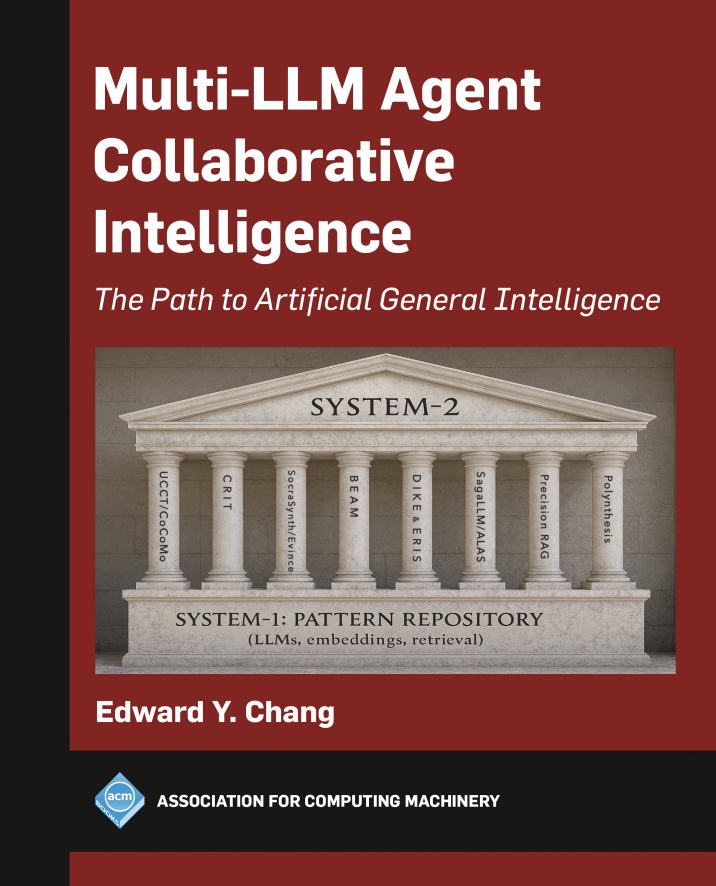
Volume 1 cover

Vol. 1 · Multi-LLM Agent Collaborative Intelligence

One prior cannot see its blind spots; committees of priors can. Debate, critique, and transactional planning.

ACM Books 2025Top seller

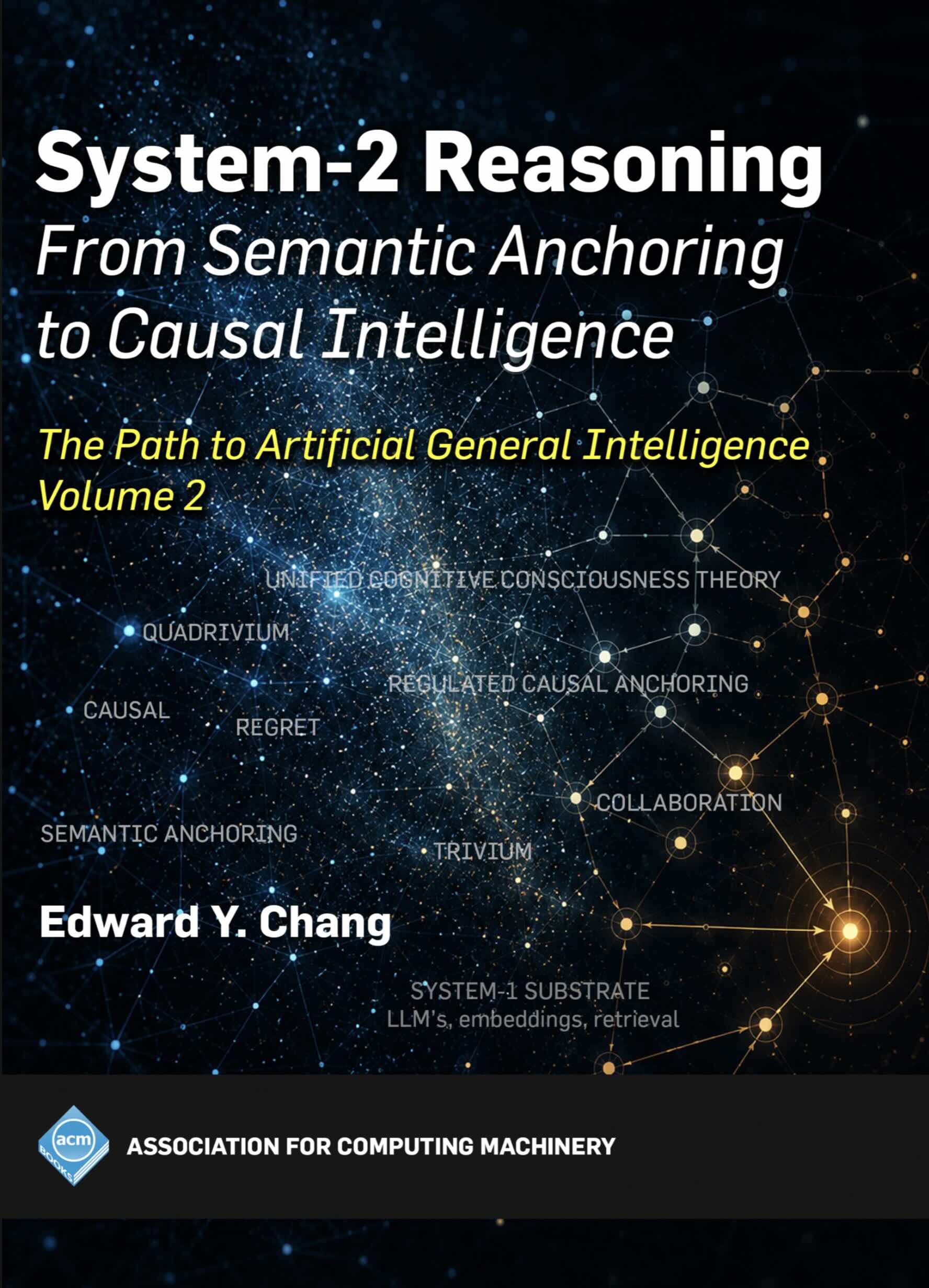
Volume 2 cover

Vol. 2 · System-2 Reasoning: From Semantic Anchoring to Causal Intelligence

Semantics is not in the box; it is in the binding. Anchoring, causal audit, and regret as first-class objectives.

ACM Books 2026

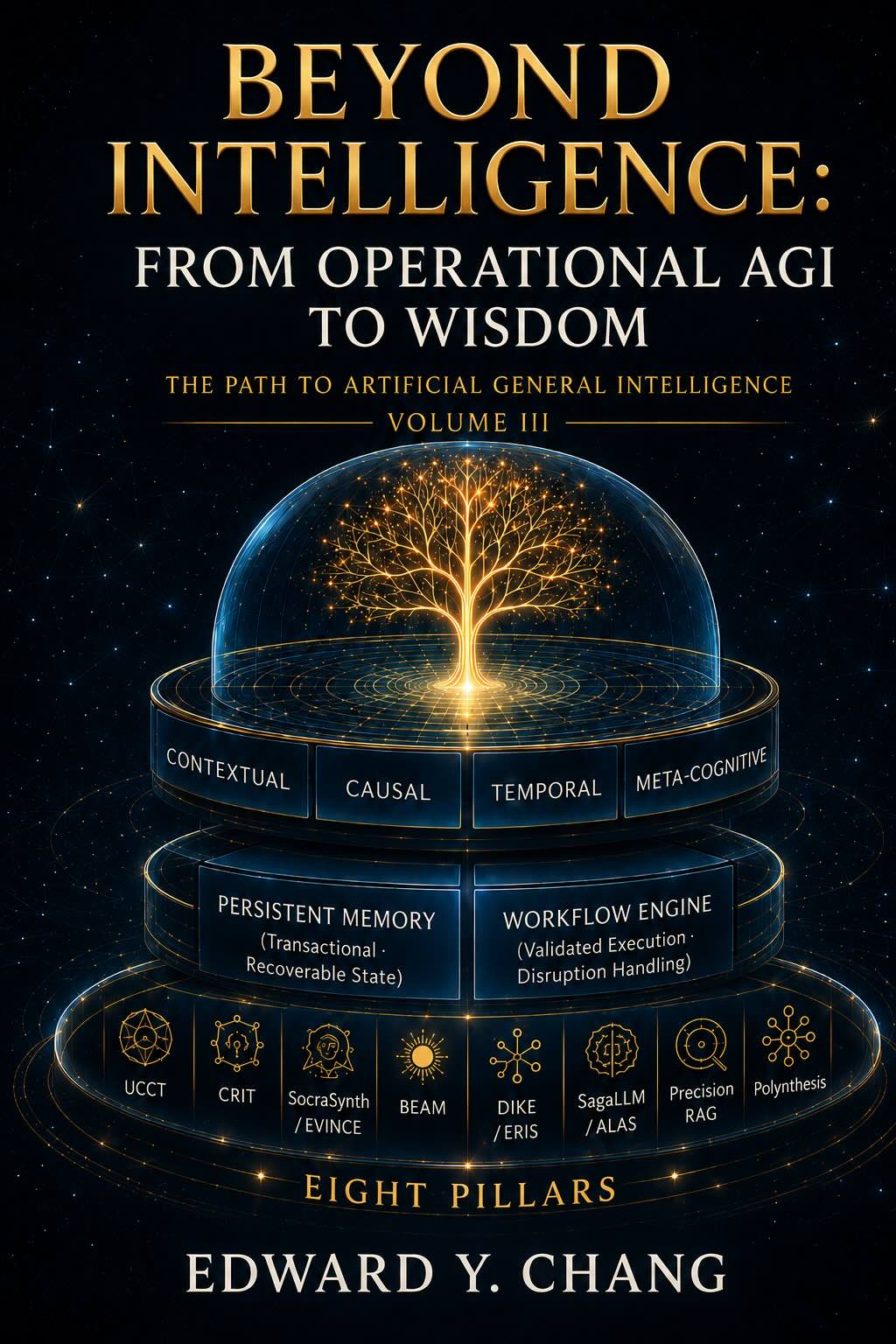
Volume 3 cover

Vol. 3 · Beyond Intelligence: From Operational AGI to Wisdom

Memory you can trust, effects you can audit, and a wisdom layer that governs what is optimized.

Forthcoming 2027

Research

The research program, in the trilogy's order

Semantic Anchoring and UCCT

What an LLM is (a pattern repository) and where semantics comes from: anchoring strength S = ρd − dr − log k, threshold-governed regime shifts, and the boundary between model and system. ICML 2026arXiv 2025

Debate as an Instrument

CRIT scoring, SocraSynth structured opposition with contentiousness as behavior control, and EVINCE's information-theoretic controller: committees beat their best member, measurably. The DIKE–ERIS checks-and-balances framework extends structured opposition into ethical governance. ICML 2025NeurIPS SafeAI 2024IEEE 2023100+ citations

Causal Reasoning and Audit

Rung collapse, sycophancy, and Wise Refusal, diagnosed at scale: CausalT5K, RAudit's blind process audits, and the Skepticism Trap and Scaling Paradox in frontier models. KDD 2026ACL 2026

Learning from Regret: ERM and RLER

The end of what-only feedback: epistemic regret critiques the why, temporal regret measures the when, and RLER turns accumulated interventional evidence into reward. arXiv 2026

Transactional Agents and Governed Memory

SagaLLM and ALAS bring compensable, disruption-aware planning and execution; REALM-Bench supplies the real-world planning benchmark that stress-tests them; Mnemosyne and the ATP contract promote admission, compensation, and durable obligations into substrate guarantees. VLDB 2025KDD 2026arXiv 2026

Physical AGI, Governance, and Wisdom

TRW's world-model-as-materialized-view bridge between cognitive and physical AI, and Architectural Wisdom, governing what systems optimize. arXiv 2026

The vocabulary map

Their words, this record

The field is converging on this program under new names. This table keeps the record straight: the term now in circulation, the name and date it carries here, and where it lives.

Circulating term (2025–26) This program's name First stated
“Reasoning models,” test-time computeSystem-2 coordination over pattern repositoriesVol. 1 (2024–25); ICML 2026
Process reward, critique modelsEpistemic regret: why-feedback, label-free critiqueERM (Feb 2026); Vol. 2
Agent durability, workflow engines, “sagas”Transactional agents: SagaLLM/ALAS; the generated→admitted breakVLDB 2025
Agent benchmarks, agentic evaluationREALM-Bench: real-world planning under disruption; the on-ramp that carried SagaLLM’s adoptionREALM (2025); KDD 202640+ citations
Agent memory (vector databases)Governed memory: ATP admission, three times, durable obligationsMnemosyne (Jun 2026); Vol. 3
“Grounding,” does-it-really-understandThe semantic-anchoring invariant: S = ρd − dr − log kUCCT (Jun 2025); ICML 2026
World-model reliabilityThe world contract: materialized views, commitment reads, priced refreshTRW (Jul 2026); Vol. 3
Multi-agent “discussion,” LLM-as-judge, process rewardBehavior-controlled debate; and RCA: the first no-gold-label judge, grading process, not answersSocraSynth (2023), EVINCE (2024); ACL 2026
Refusal calibration, abstention, “knowing when not to answer”Wise Refusal, scored on three axes: Utility, Safety, calibrated abstention (CausalT5k’s 5,147 expert cases)CausalT3/T5k; KDD 2026
Knowing-doing gap, faithfulness of stated reasoningDetection is not correction: models name the flaw (77–91% detection), then endorse the claim anyway (only 26–42% aligned)KDD 2026
AI constitutions, oversightChecks-and-balances: DIKE–ERIS three-branch governanceNeurIPS SafeAI 2024 ICML 2025
Provenance: fifty years, one program

The transactions thread is inheritance, not analogy: high-performance transaction processing built with Jim Gray; workflow with Dieter Gawlick at DEC; a Stanford Ph.D. under Hector Garcia-Molina, co-author of the 1987 Sagas paper that SagaLLM extends four decades later. The data thread was earned in computer vision's feature-engineering years, where scale kept beating cleverness, and became the data-centric program and the ImageNet sponsorship. The applied thread ran a decade of healthcare AI to an XPRIZE. The pre-LLM virtual-assistant years showed exactly where traditional NLP ends, which made the 2023 commitment to LLMs a decision, not a fashion. And the wisdom thread rests on fifteen-plus philosophy courses, a student philosophy-journal editorship, and published poetry: Volume 3's Part III was five decades in preparation.

AGI Publications

Selected publications

Full publication list at Google Scholar →

Working papers and preprints

Jul 2026ground-breaking
TRW: TRACE-RealWorld — An Auditable Consistency Contract for World Models as Materialized Views
Edward Y. Chang
TL;DR: Ensures consistency between the real world and the digital world: world state as a materialized view with typed commitment reads and auditable adaptive refresh.
Jul 2026new
TRACE: An Operational Reasoning Schema for Auditable Agentic Commitments
Edward Y. Chang and Emily J. Chang
TL;DR: A typed, versioned schema for reasoning records and one operating discipline: no durable state change without a record. Argues in three layers that reasoning is not in the language model.
Jun 2026new
Mnemosyne: Agentic Transaction Processing for Validating and Repairing AI-generated Workflows
Edward Y. Chang, Longling Geng, and Emily J. Chang
TL;DR: ATP treats all model actions as untrusted proposals under deterministic runtime admission; the open-source Mnemosyne runtime decouples committed-state correctness from the intelligence layer.
Jun 2026new
Architectural Wisdom: A Framework for Governing Optimization in AI Systems
Edward Y. Chang
TL;DR: A wisdom layer that constrains what an agent should optimize, restrain, and preserve. Foundational to The Path to AGI, Volume 3.
May 2026new
Trivium: Temporal Regret as a First-Class Objective for Causal-Memory Controllers
Edward Y. Chang
TL;DR: Outcome-only correction captures only the what of failure; epistemic and temporal regret add the why and the when, yielding logarithmic delayed-identification regret over a persistent causal transaction log.
Mar–Apr 2026new
Exploring Collatz Dynamics with Human–LLM Collaboration
Edward Y. Chang
TL;DR: A conditional convergence framework reducing the conjecture to a single orbit equidistribution hypothesis, developed through a documented human–LLM collaboration whose failure modes are themselves analyzed.
Feb 2026new
Epistemic Regret Minimization: Label-Free Causal Critique Beyond Outcome Reward
Edward Y. Chang, Longling Geng
TL;DR: ERM critiques how LLMs reason causally, not just what they answer, catching shortcuts that outcome-only reward entrenches, without ground-truth labels.
arXiv 2025
UCCT: The Unified Cognitive Consciousness Theory for Language Models
Edward Y. Chang, Zeyneb N. Kaya, Ethan Chang
TL;DR: How LLMs turn pretrained capacity into goal-directed behavior via semantic anchoring: S = ρd − dr − log k, threshold-like performance flips, and ICL, retrieval, and fine-tuning unified as anchoring variants.
arXiv 2024
EVINCE: Optimizing Adversarial LLM Dialogues via Conditional Statistics and Information Theory
Edward Y. Chang
TL;DR: Information-theoretic metrics to optimize multi-agent debates, measuring when additional rounds yield diminishing returns.

Accepted publications, 2023–2026

ACM Books 2026new
System-2 Reasoning: From Semantic Anchoring to Causal Intelligence (The Path to AGI, Vol. 2)
Edward Y. Chang
KDD 2026new
CausalT5K: Diagnosing and Informing Refusal for Trustworthy Causal Reasoning
Longling Geng, Andy Ouyang, Theodore Wu, Daphne Barretto, Matthew John Hayes, Rachael Cooper, Yuqiao Zeng, Sameer Vijay, Gia Ancone, Ankit Rai, Matthew Wolfman, Patrick Flanagan, Edward Y. Chang
TL;DR: A 5,000+ sample benchmark for causal reasoning: intervention queries, counterfactuals, sycophancy resistance, and Wise Refusal across ten domains.
KDD 2026new40+ citations
REALM-Bench: A Real-World Planning Benchmark for LLMs and Multi-Agent Systems
Longling Geng, Edward Y. Chang
TL;DR: Real-world planning tasks that expose the gap between LLM reasoning and practical deployment.
ICML 2026
AGI Requires a Coordination Layer on Top of Pattern Repositories (Position Track)
Edward Y. Chang
TL;DR: Critiques miss the bottleneck: pattern repositories are the necessary System-1 substrate; the missing component is System-2 coordination. An anchor paper of Volume 1.
ACL 2026
Diagnosing and Mitigating Sycophancy and Skepticism in LLM Causal Judgment
Edward Y. Chang
TL;DR: The Skepticism Trap and the Scaling Paradox: larger LLMs regress into paralysis under causal ambiguity; CausalT3 and Recursive Causal Audit mitigate at inference time.
ACM Books 2025Top seller
Multi-LLM Agent Collaborative Intelligence: The Path to AGI (Vol. 1)
Edward Y. Chang
VLDB 2025ground-breaking70+ citations
SagaLLM: Context Management, Validation, and Transaction Guarantees for Multi-Agent LLM Planning
Edward Y. Chang, Longling Geng
TL;DR: Database-style guarantees for multi-agent LLM planning: atomic, consistent, recoverable via compensating transactions.
ICML 2025
A Checks-and-Balances Framework for Ethical AI Alignment
Edward Y. Chang
TL;DR: A three-branch governance architecture (Executive, Legislative, Judicial) preventing unilateral harmful action.
NeurIPS SafeAI 2024
A Three-Branch Checks-and-Balances Framework for Context-Aware Ethical Alignment of LLMs
Edward Y. Chang
IEEE MIPR 2024
Behavioral Emotion Analysis Model for Large Language Models (invited)
Edward Y. Chang
IEEE CCWC 2023100+ citations
Prompting Large Language Models with the Socratic Method (CRIT)
Edward Y. Chang
IEEE CSCI 2023100+ citations
Examining GPT-4's Capabilities and Enhancement with SocraSynth
Edward Y. Chang
Pioneering data-centric AI, 2007–2012

Before the term existed

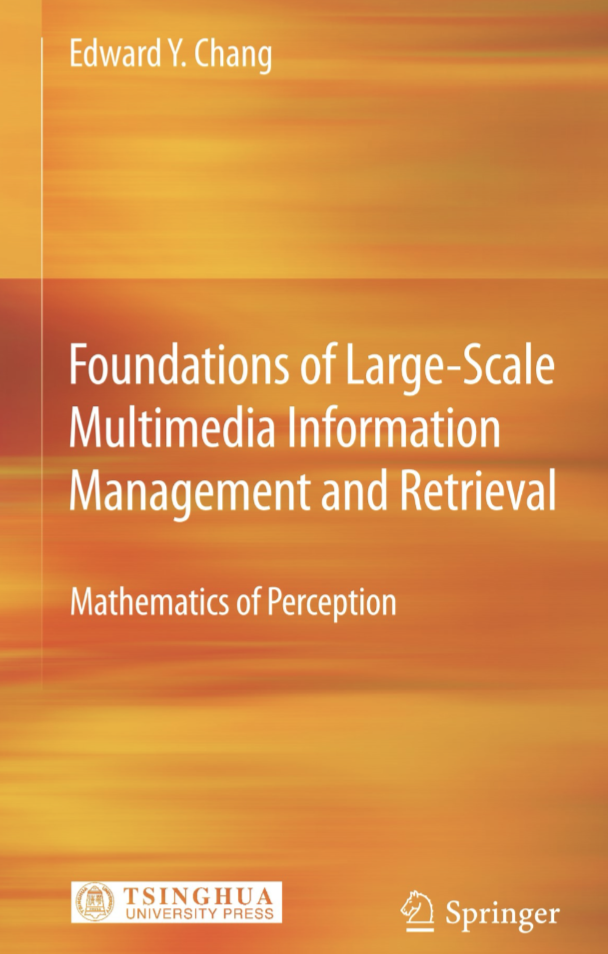
As Director of Google Research (Beijing), our team built web-scale annotated datasets and parallel learning infrastructure years before "data-centric AI" was coined: one of the first web-scale annotated image datasets, sponsorship of Fei-Fei Li's ImageNet project, and a series of parallel ML algorithms on MapReduce, consolidated in the Springer book Foundations of Large-Scale Multimedia Information Management and Retrieval (2011), whose Chapter 2 formulated the data-driven + model-based hybrid (DMD) a decade early.

2007

Parallel SVMs

Scalable support vector machines on distributed systems (NeurIPS 2007).

2008

Web-scale image annotation

30K+ web images annotated via distributed LDA on MapReduce.

2008

Parallel LDA

Distributed Gibbs sampling on MapReduce.

2008–10

Parallel spectral clustering

Large-scale graph partitioning on distributed infrastructure.

2009–10

Parallel frequent itemset mining

Scalable pattern mining for web-scale data.

2010–12

ImageNet sponsor

Sponsored Fei-Fei Li's ImageNet project at Google Research.

2010–12

Parallel CNN

Early distributed CNN training, anticipating the deep learning revolution.

2011

Springer book

DMD hybrid architecture; all parallel algorithms documented (Chs. 9–12).

Books

Books

Volume 3 cover

Beyond Intelligence: From Operational AGI to Wisdom (Vol. 3)

ACM Books, expected 2027 · Forthcoming

Volume 1 cover

Multi-LLM Agent Collaborative Intelligence (Vol. 1)

ACM Books, December 2025 · Top seller

Unlocking the Wisdom cover

Unlocking the Wisdom of Large Language Models

Introduction to the Path, September 2024 · arXiv full text

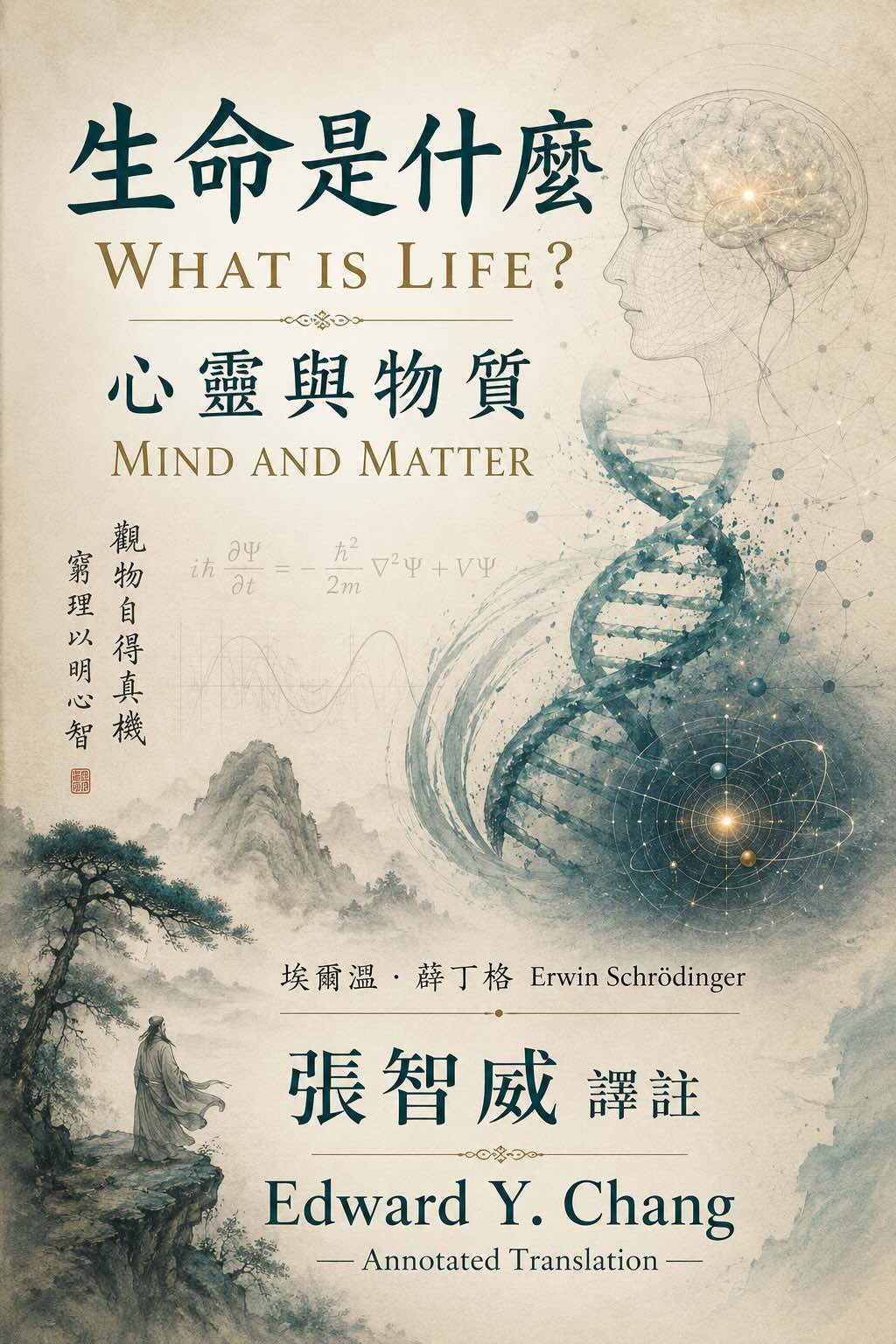
Journey of the Mind cover

Journey of the Mind, Ascending Everest

Poetry and philosophy, 2022

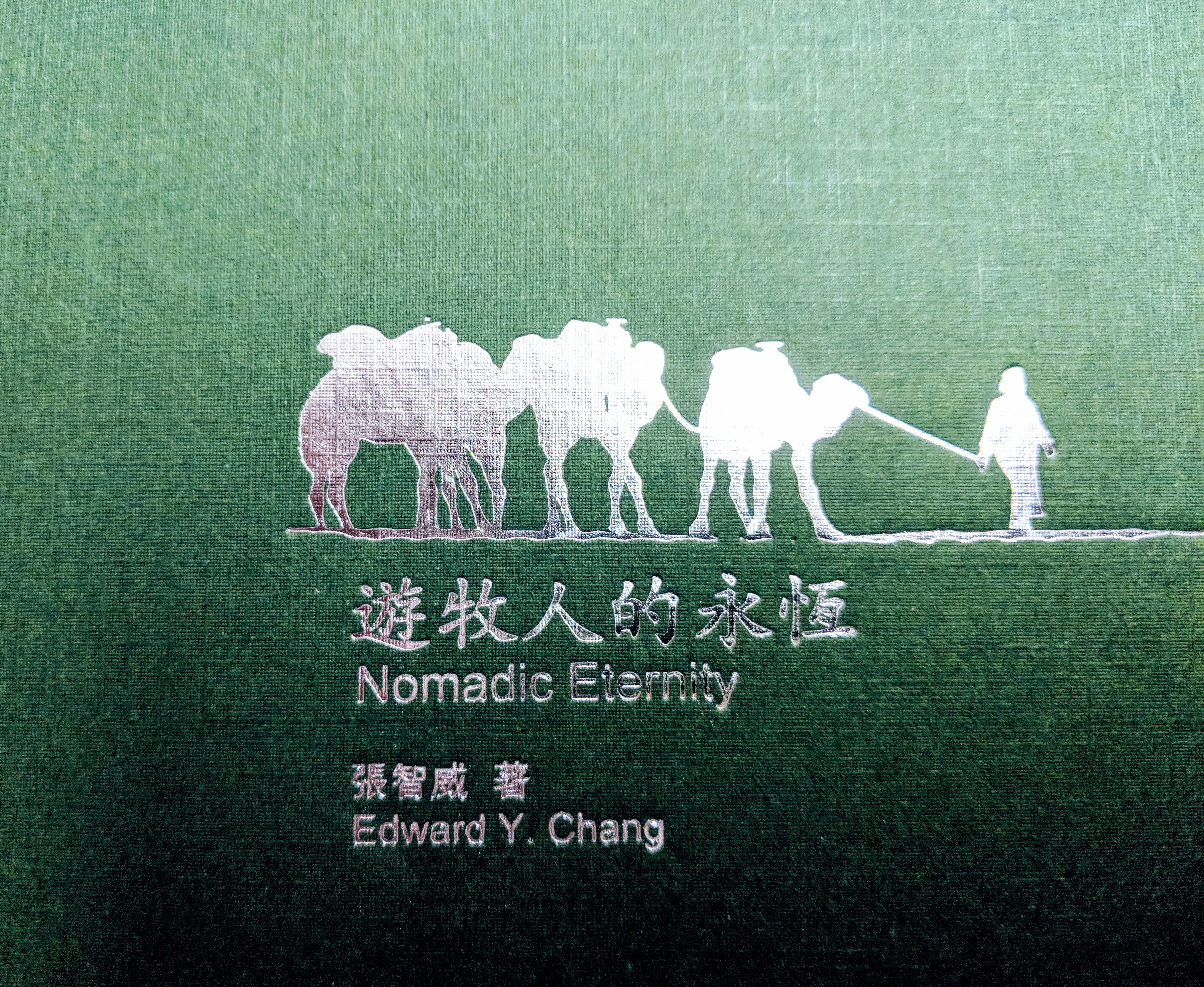
Nomadic Eternity cover

Nomadic Eternity

Poetry, Tsinghua University Press, 2012

Teaching

Teaching at Stanford

Background

Background

Education

  • Ph.D., Electrical Engineering, Stanford University
  • M.S., Computer Science, Stanford University
  • M.S., IEOR, UC Berkeley

Industry

  • Director of Research, Google, 2006–2012
  • President, HTC Healthcare, 2012–2021
  • Chief NLP Officer, SmartNews, 2019–2022

Selected honors

  • XPRIZE Tricorder, $1M award for AI medical diagnosis, 2017
  • ACM Fellow and IEEE Fellow, scalable ML and healthcare AI
  • NSF CAREER Award · ACM SIGMM Test of Time Award

Previous academic

  • Professor (tenured), UC Santa Barbara, 1999–2006
  • Visiting Professor, UC Berkeley, 2017–2019
  • Adjunct Professor, Stanford, 2019–2026